

Chess Notation Explained: The Language of Chess
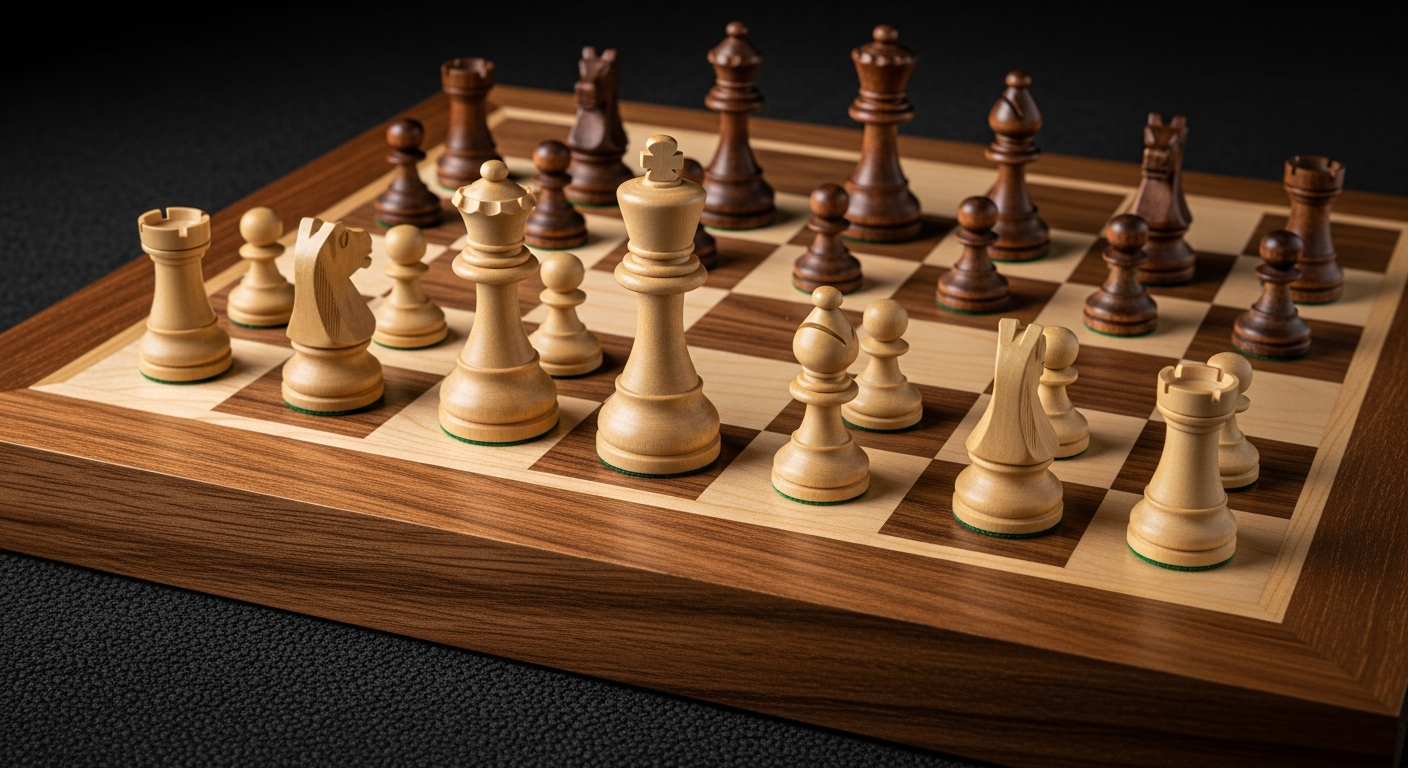
Speaking the Language
Algebraic notation is the universal language of chess. It allows players from different countries to communicate games and ideas without speaking the same spoken language. Learning it is key to studying books and analyzing your games.
The Grid
The board is an 8x8 grid. Files (columns) are lettered a through h from White's left to right. Ranks (rows) are numbered 1 through 8 from White's side to Black's side. Every square has a name: e4, d5, f7, etc.
The Pieces
Each piece has a single letter abbreviation (usually the first letter of its English name):
- K = King
- Q = Queen
- R = Rook
- B = Bishop
- N = Knight (K is taken!)
- Pawns have no letter.
Writing Moves
To write a move, combine the piece letter and the destination square. Be5 means "Bishop moves to e5." Nf3 means "Knight moves to f3." For pawns, just write the square: e4.
Special Symbols
- x = Capture (e.g., Qxe5)
- + = Check
- # = Checkmate
- 0-0 = Kingside Castle
- 0-0-0 = Queenside Castle
Frequently Asked Questions
Q:Do I have to write notation in online games?
No, the computer does it for you automatically! But knowing how to read it helps you review the game log.
Q:Why is the Knight "N"?
Because "K" is already used for the King. "N" is the second letter of Knight and sounds distinct.
Ready to Put Your Skills to the Test?
Join thousands of players on Shatrang Online and start playing chess today!
Start Playing Free